"It makes it possible to rest inside your own house": community voices from an India field site
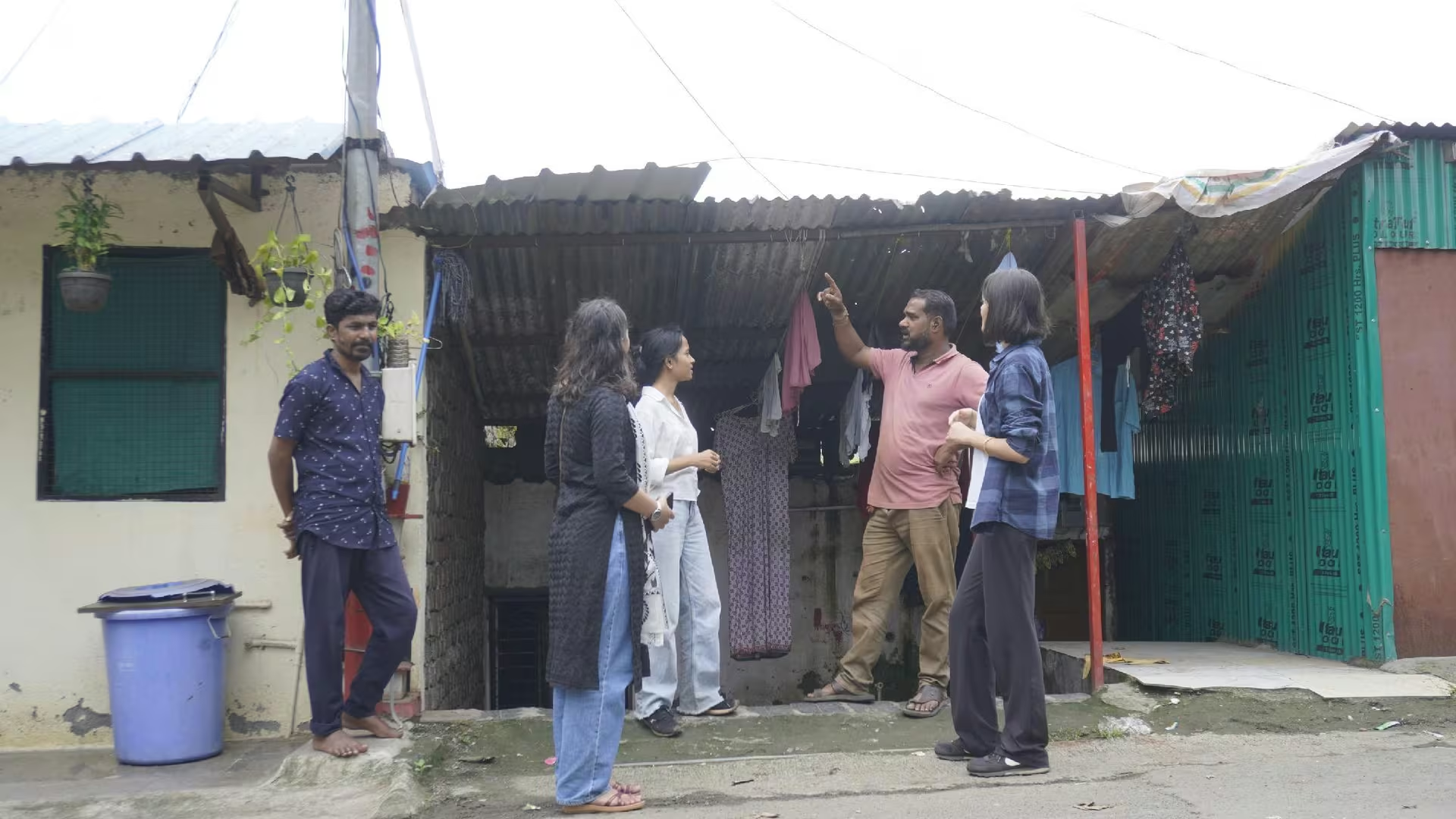
At an experimental site where MEER reflective sheets have been installed on family homes, Mr. Rajput — brother of a resident — described the noticeably cooler afternoons his sister's family now experiences under the adapted roof.
As temperatures continue to rise across South Asia, the impacts of extreme heat are being felt most acutely by those living in vulnerable communities. Traditional homes, often built with tin or concrete roofs, absorb and trap heat, turning indoor spaces into ovens during the hottest months. At the same time, the monsoon brings intense rains that can leave homes damp and uninhabitable. MEER's passive cooling technology — lightweight reflective sheets that both deflect sunlight and withstand rain — offers a new way forward.
This week, members of the MEER India team visited one of our experimental sites where the cooling sheets have already been installed on several family homes. The team met Mr. Rajput, brother of a local resident whose home was recently climate-adapted with MEER sheets. Standing under the shade of the adapted roof, he shared how his sister's home now remains significantly cooler during the sweltering afternoons — a difference that has made daily life more bearable and healthier for her family.
What stood out during the visit was the enthusiasm from Mr. Rajput and other community members. As he put it: "When the heat is so strong, you cannot even rest inside your own house. But this makes it possible. It is good for everyone, not just for one home." Others echoed his sentiment, pointing out that relief from both heat and rain would make a significant difference for families struggling to cope with increasingly harsh weather.
The urgency could not be clearer. India is experiencing longer and hotter heatwaves than ever before, with many regions regularly surpassing 45°C in summer, while air conditioning remains unaffordable for millions. Passive solutions like MEER's reflective sheets fill this critical gap: low-cost, scalable and designed to integrate seamlessly into existing community structures. Beyond cooling, they help reduce rainwater intrusion, offering dual protection against two of the most pressing climate stressors.
Our conversations reminded us of a simple but powerful truth: climate resilience starts at home. When families feel safer and more comfortable under their own roofs, it creates a foundation for broader community strength — and Mr. Rajput's call to expand the technology reflects a wider demand for solutions that are effective and equitable.