The MEER story
Our Story
From one scientist’s idea to an international movement developing practical solutions to cool a warming world.
01 · It began with a question
One question that would not let go.
“If the planet is becoming dangerously hot, why are we focusing almost entirely on reducing future warming — instead of also asking how we can safely reduce temperatures today?”
It sounds simple. It isn’t. The question challenges an entire generation of climate strategy that has focused, almost exclusively, on slowing future warming through decarbonisation.
That work is essential — but it is not enough for the people already living inside the heat. What if Earth’s surface itself could become part of the solution? What if we could return some of the sun’s energy to space, safely, starting now?
02 · From research to action
A scientist, and a decision to build.
Dr. Ye Tao spent years working across chemistry, physics, materials science and engineering. That unusual breadth eventually pointed him toward a single, practical question: could we cool Earth’s surface — safely, measurably, today?
In 2021, that work stopped being just research. MEER — Mirrors for Earth’s Energy Rebalancing — was founded with a clear mandate: move surface-cooling out of the lab and into the real world, where extreme heat is already reshaping lives.
The goal was never a paper. The goal was a measurable difference for the people who need it first.
03 · Building an international organization
An idea grew a team around it.
MEER is intentionally multidisciplinary. Engineers, architects, scientists, designers, environmental specialists, community practitioners and volunteers from around the world now shape the work — because solving a climate-scale challenge requires expertise from many fields at once.
04 · Learning from communities
Never purely laboratory-based.
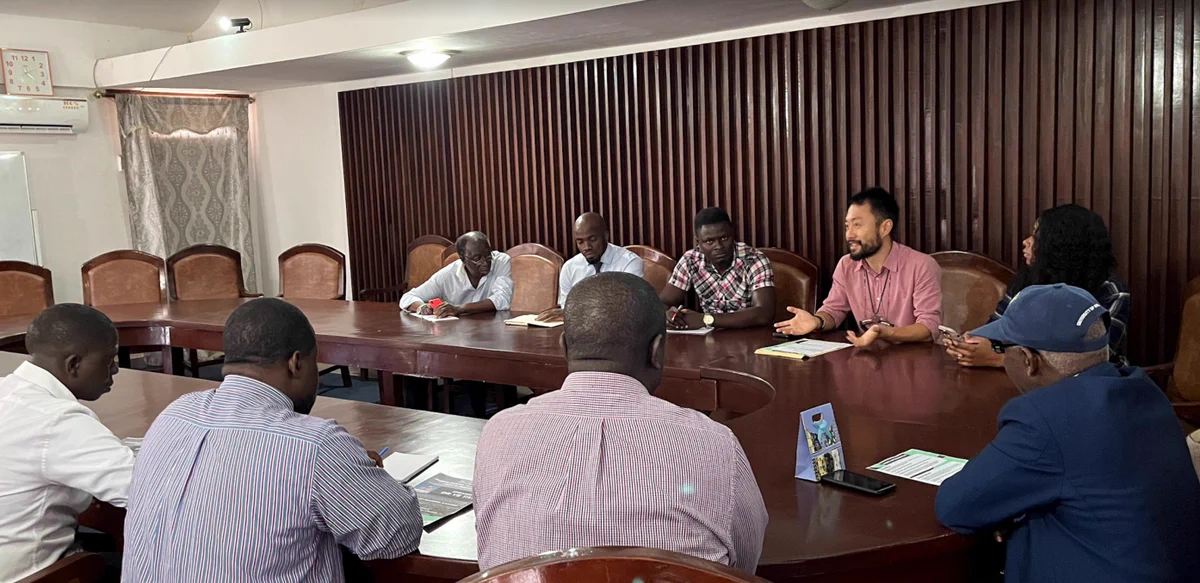
The defining thread in MEER’s story is that we work alongside communities experiencing extreme heat — not simply for them.
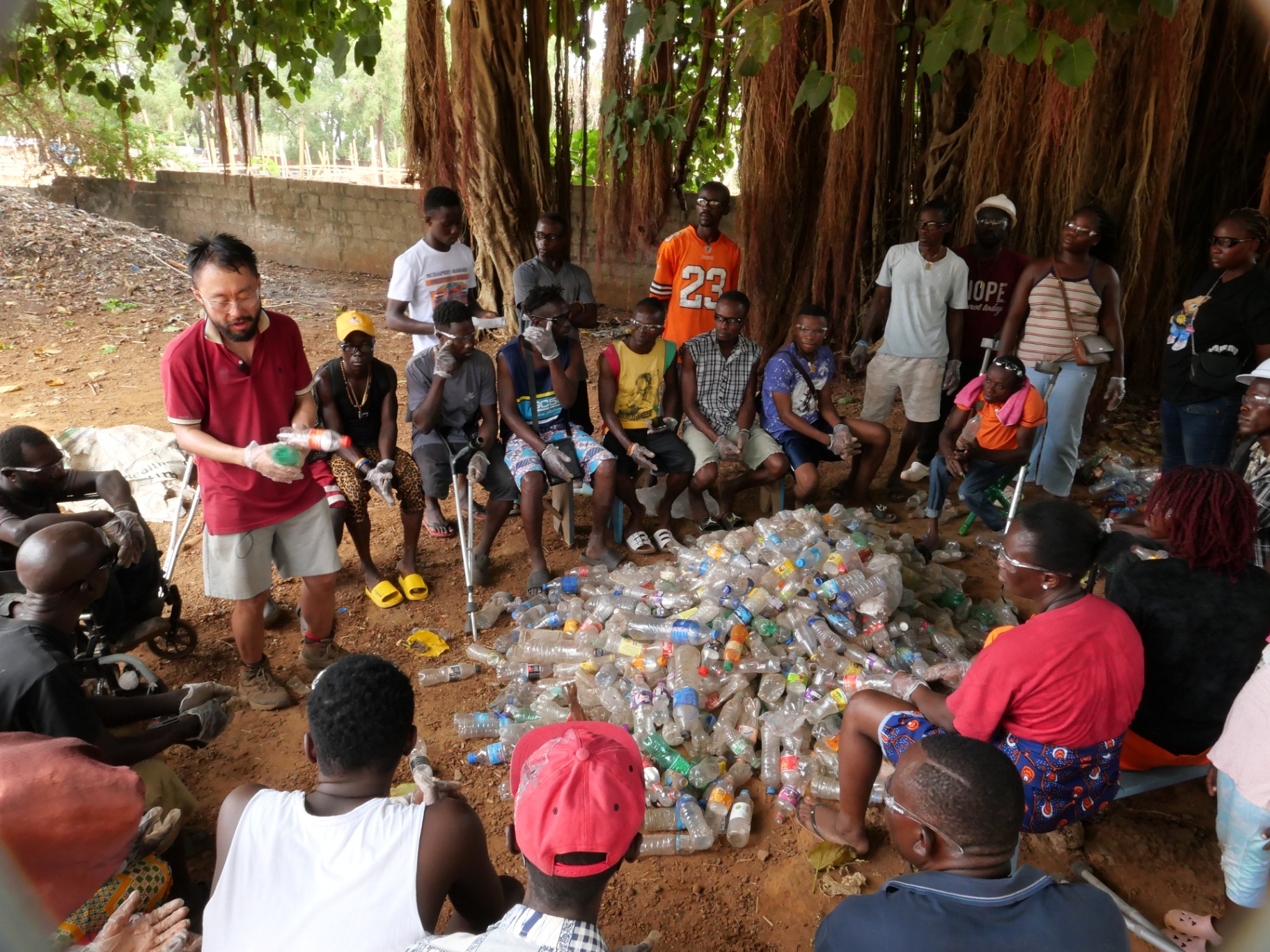
In Sierra Leone, in India, and in growing collaborations elsewhere, we listen, learn and co-design. Local knowledge shapes what gets built, how it’s installed, and how it’s maintained.
Community experience continually improves our research and engineering. The lab and the street are the same conversation.
Sierra Leone
Cool roofs & community-led installation in Freetown neighbourhoods.
India
Multi-site programs: canopies, sensors and training with local partners.
International collaborations
Universities and NGOs contributing across continents.
Frontline listening
Every deployment begins with the people who will live with it.
05 · Innovation through collaboration
No single organization solves this alone.
MEER’s progress is only possible because partners choose to build with us — across disciplines, sectors and geographies. Collaboration is not a strategy for MEER. It is our identity.
06 · Milestones
A journey, still being written.
A short timeline of moments that shaped MEER — not everything, just the turns that mattered.
- Pre-2021
A question that would not leave
Dr. Ye Tao — working across chemistry, physics, materials science and engineering — begins asking whether Earth's surface itself could be part of the climate solution, not only its atmosphere.
- 2021
MEER is founded
Mirrors for Earth's Energy Rebalancing is established as a nonprofit, with a mandate to move surface-cooling research out of the lab and into the world.
- 2022
First prototypes & materials research
Early reflective assemblies, coatings and radiative-cooling material studies mature into deployable prototypes, tested for durability and optical performance.
- 2023
First international partnerships
Collaborations begin with universities, engineers and community organizations across multiple continents — the first shape of an international team.
- 2024
Field deployments begin
First cool-surface installations and sensor deployments in communities experiencing dangerous heat. Data flows back into the science.
- 2025
Sierra Leone & India programs
Community-led programs in Freetown and multiple sites in India — cool roofs, canopies, sensors, training and co-designed local capacity.
- 2026
A multi-continent organization
Engineers, architects, scientists, designers, environmental specialists and volunteers now contribute across continents. MEER becomes a distributed, multidisciplinary team.
- AheadFuture
Scaling with communities, not over them
New materials, larger deployments, deeper partnerships, and open science — always designed with the people who live under the heat.
07 · The story is just beginning
The greatest chapters lie ahead.
MEER has already made real progress — but we are still in the early stages of a much larger journey. The next chapters will be written through continued scientific innovation, deeper collaboration, and global partnerships with the communities most affected by extreme heat.
We’d like you to be part of it.
Continue exploring