Our Technologies
A portfolio of complementary passive cooling technologies — under active research, engineering and field validation — designed to help communities adapt to increasing extreme heat.
- Technologies
- 5
- Research sites
- 4+
- Status
- R&D
Research & Product Development
MEER is actively developing passive cooling products. Every technology on this page sits somewhere along a continuous path from concept research and laboratory development through engineering design, prototype testing and field validation. Research and product development happen together — one informs the other at every stage.
Designs, materials and engineering continue to evolve as new scientific evidence and field experience come in. We publish our progress openly so other researchers, engineers and communities can build on the work and hold it to account.
No single technology cools every environment.
A rooftop is not a reservoir. A school courtyard is not a farm field. An informal settlement is not a hospital. MEER is developing a complementary portfolio of passive cooling technologies so that different sources of heat can each be met with the most appropriate approach — rather than trying to force one universal solution onto every environment.
- Buildings & rooftopsRoofs · Coatings
- SchoolsRoofs · Canopies
- MarketsCanopies
- Public spacesCanopies
- Reservoirs & water bodiesFloating
- AgricultureCanopies · Coatings
- Healthcare facilitiesRoofs · Coatings
- Industrial facilitiesRoofs · Coatings · Floating
- WarehousesRoofs · Coatings
Making the world's rooftops send heat back to the sky.
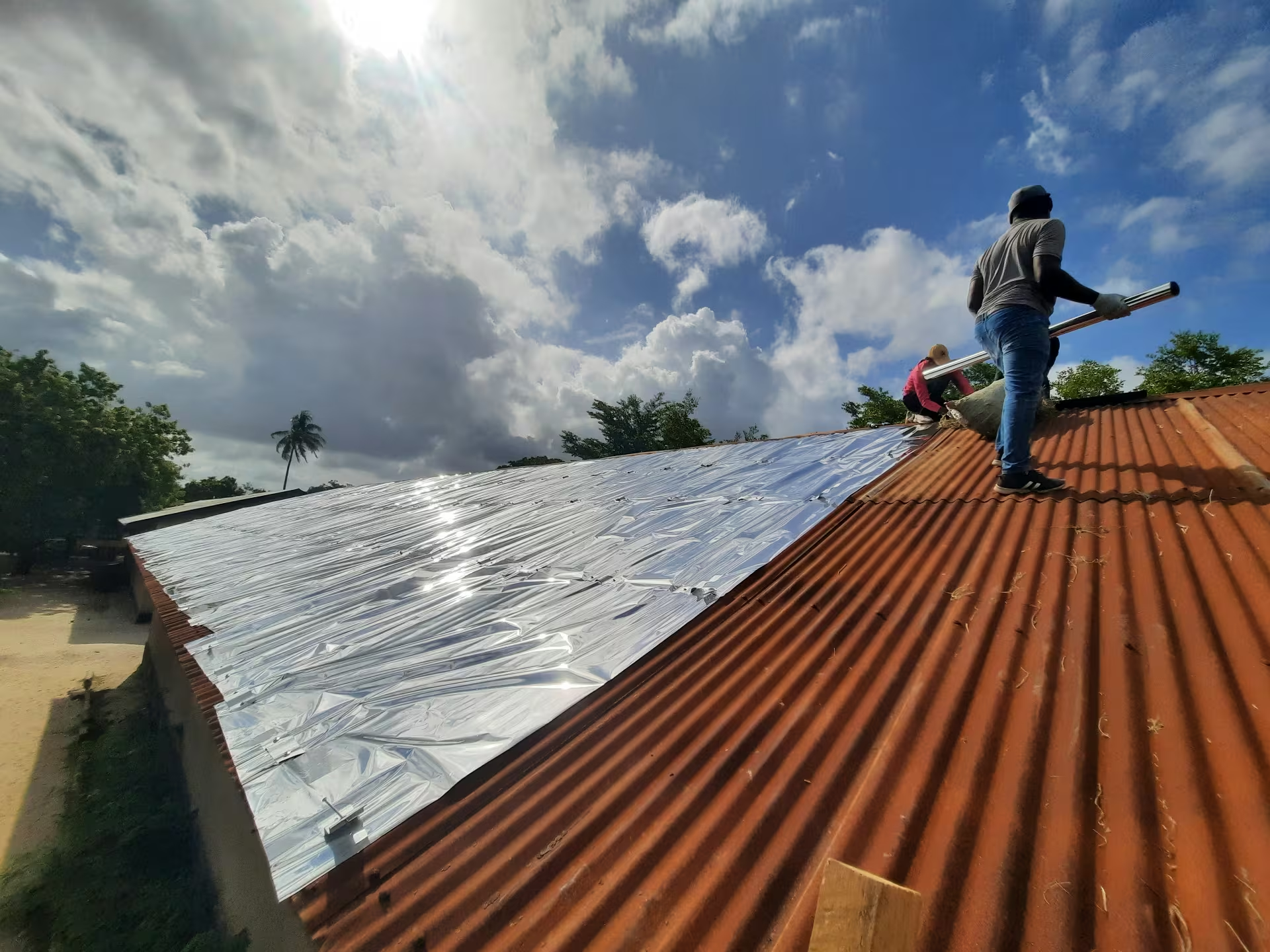
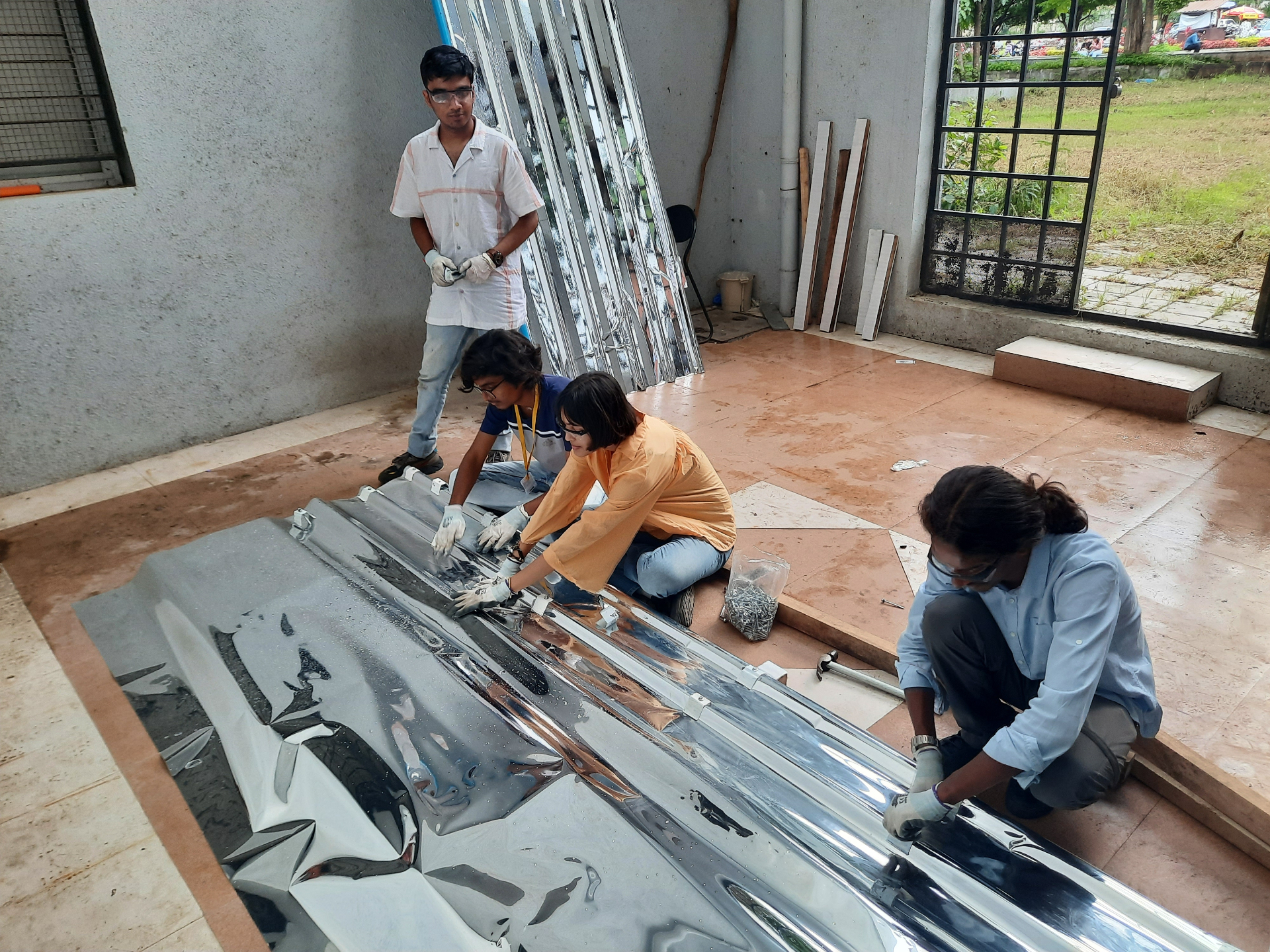
High-albedo rooftop treatments are MEER's most mature technology strand — currently being trialled and monitored in field programmes across Sierra Leone, India and Tanzania.
Reflect first, absorb less.
A dark metal roof can exceed 70 °C on a sunny afternoon, radiating heat downward into the rooms below. Replacing that surface with a highly reflective material sends a significant portion of incoming sunlight back to the sky before it becomes heat.
The result is a cooler roof surface, cooler indoor air, less thermal stress on the structure, and less demand for mechanical cooling.
From measurement to next-generation coatings.
MEER teams are measuring surface, indoor and ambient temperatures at instrumented sites, comparing treated and untreated rooftops under real-world conditions across multiple climates.
In parallel, our materials scientists are developing next-generation reflective coatings designed to deliver higher solar reflectance, longer durability under UV and weathering, and simpler application in low-resource settings.
Learning from three continents.
Programmes in Freetown, Pune and Dar es Salaam allow us to compare performance across tropical, monsoonal and coastal climates — and to learn which application methods hold up best over time.
Toward affordable, durable, scalable.
The next iterations of the technology are focused on cost reduction, longer service life, and compatibility with locally available substrates and application skills — the conditions that determine whether a technology can scale to protect millions of homes.
A cooling coating designed for the world, not the shelf.
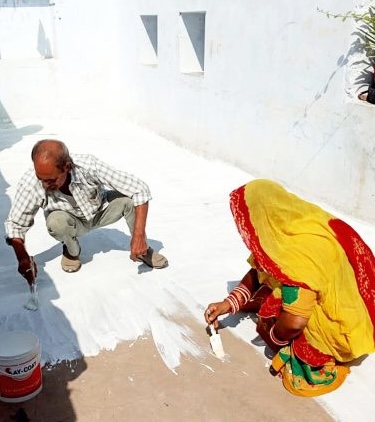
MEER's passive cooling paint is currently under development through our research programme in China. Laboratory optimisation continues alongside durability and performance testing, with the goal of a coating that combines high reflectivity, genuine durability and affordability.
Development objectives
- High reflectivity. Maximise solar reflectance across the full solar spectrum.
- Genuine durability. Maintain performance under UV, dust, rain and thermal cycling.
- Affordability. Use widely available raw materials and simple processing.
- Easy application. Compatible with brush, roller and low-pressure spray.
- Globally accessible. Suitable for the Global South and the Global North alike.
A research-driven product programme.
MEER is developing this coating as a product, guided by rigorous research. Formulations are iterated and characterised at our laboratory in China for optical and thermal performance, with durability and weathering testing running in parallel. Research and product development advance together.
The objective is a coating that combines high reflectivity, real-world durability and low manufacturing cost — because a cooling coating that only wealthy buyers can afford will not solve the problem we exist to solve. The long-term goal is a technology accessible in both the Global South and the Global North.
The coating is still in development. Performance claims will follow independent field validation.
Iterative development cycle
- Formulation
- Characterisation
- Reflectance test
- Weathering
- Data review
Each cycle informs the next formulation. No batch leaves the lab as a product; it leaves as evidence.
Modular reflective shade — engineered to keep evolving.
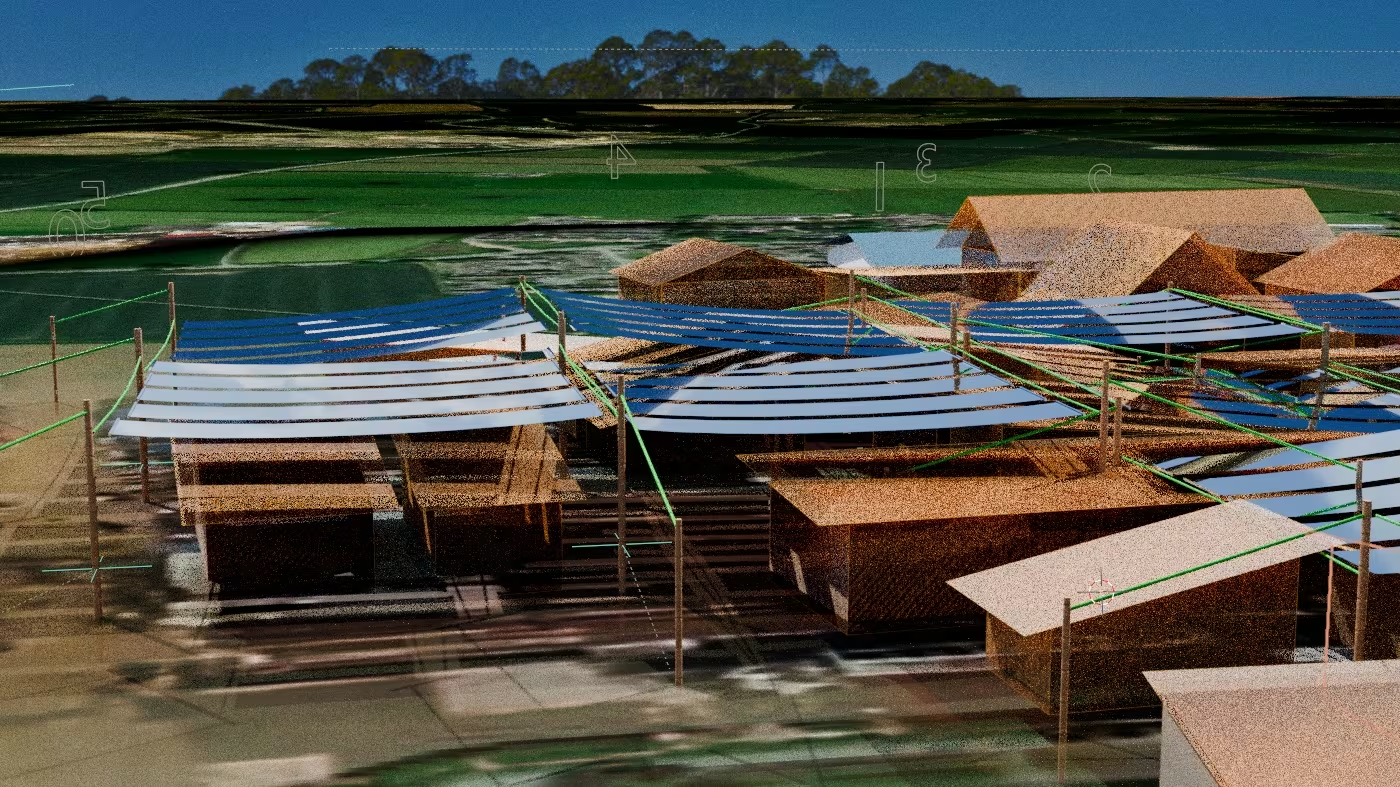
Reflective canopies shield people, animals and land from direct solar exposure while sending a substantial share of incoming energy back toward the sky. The current modular architecture remains the basis of the design, and the engineering continues to evolve through research, modelling and field testing.
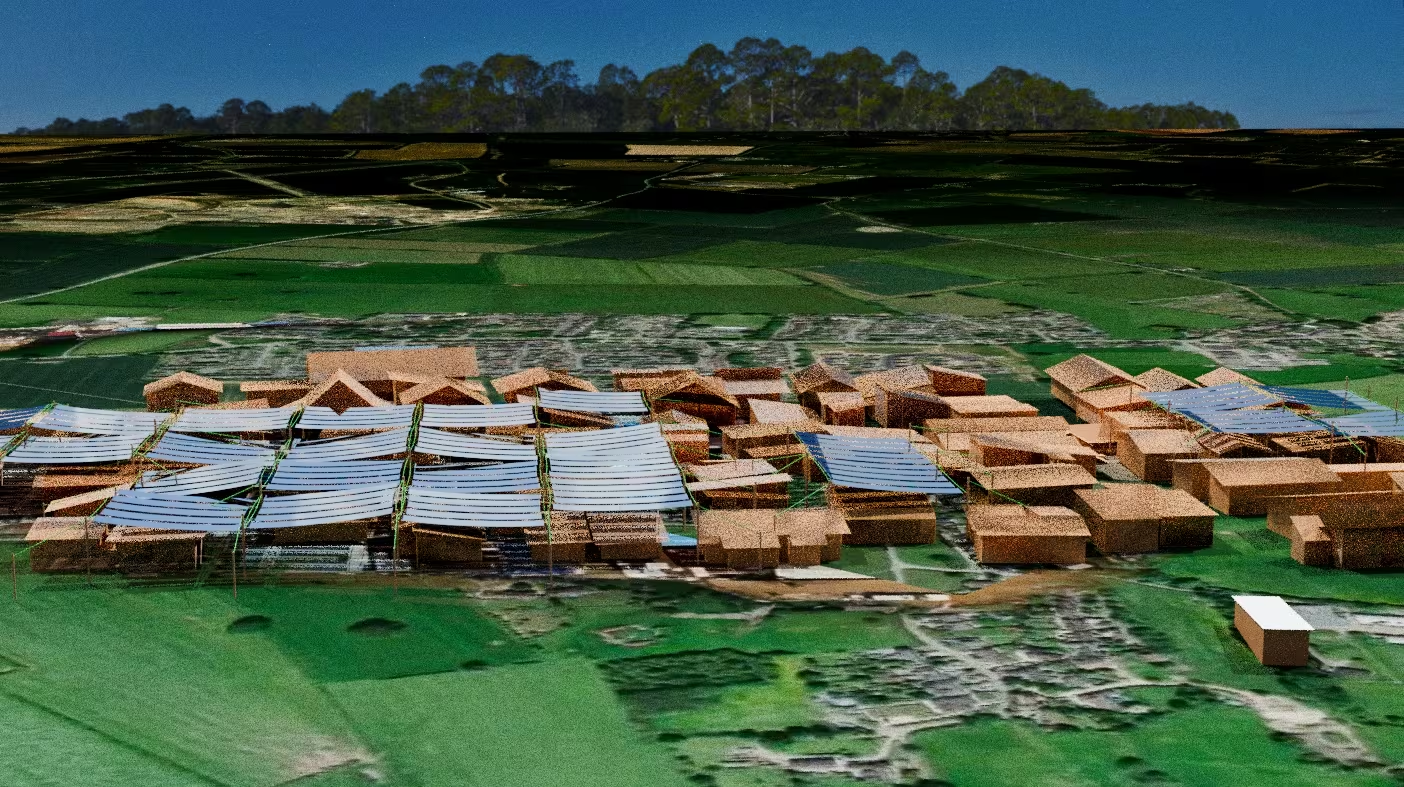
What the current research is asking.
- Modular architecture. The current modular canopy design remains the basis, allowing systems to be expanded incrementally.
- Installation. Repeatable, low-skill installation across diverse environments.
- Durability. Resistance to UV, dust, salt, humidity and thermal cycling.
- Structural performance. Wind, gust and cyclonic behaviour; minimising material while maintaining safety.
- Scalability. From a single village-scale array to district-wide deployment.
- Sustainable supports. Investigating lightweight engineered wood-based systems and other low-carbon structural materials.
MEER is actively investigating lightweight engineered wood-based systems and other low-carbon structural materials that could provide scalable support systems while reducing the embodied environmental impact of every canopy we deploy.
Engineering that keeps learning
Rather than fixed "generations", each cycle feeds back into the next — improving installation, durability, structural performance and scalability.
- 01Concept
- 02Engineering
- 03Prototype
- 04Field Testing
- 05Refinement
- 06Next Prototype
Reflective cooling for open water.
A concept-stage technology exploring floating, highly reflective modular systems designed to reduce solar absorption and evaporation from open water bodies.
Concept illustration only. Modular highly reflective elements floating on a calm reservoir. Not a photograph of a deployed system.
Concept intent
- Highly reflective surface — engineered to return incoming sunlight back toward the sky.
- Floating deployment — designed to sit on the water surface without disturbing it.
- Modular form — lightweight elements intended to be deployed at varying scales.
Specific materials, geometries and manufacturing methods are the subject of ongoing internal research and are not published at this stage.
A general concept for reflective cooling of water surfaces.
The concept investigates whether floating highly reflective systems could reduce the solar energy absorbed by open water, and in doing so lower surface temperatures and reduce evaporation. The intent is a system that is lightweight, modular and practical to deploy at scale across a range of water environments.
Potential application environments under investigation include reservoirs, irrigation ponds, industrial cooling ponds, water treatment lagoons, irrigation canals and aquaculture facilities. These remain research concepts and have not yet been validated through field deployment.
Open research areas
- Durability. Long-term integrity of reflective systems in water environments.
- Weather resilience. Behaviour under sunlight, wind, waves and storms over time.
- Ecological effects. Impact on evaporation, dissolved oxygen, light and aquatic life.
- Scalability. Producing and deploying systems at meaningful scale.
- End-of-life pathways. Recovery, reuse and long-term environmental performance.
Presented as a research direction. No deployable system currently exists.
Cooler ground, cooler crops, cooler workers.
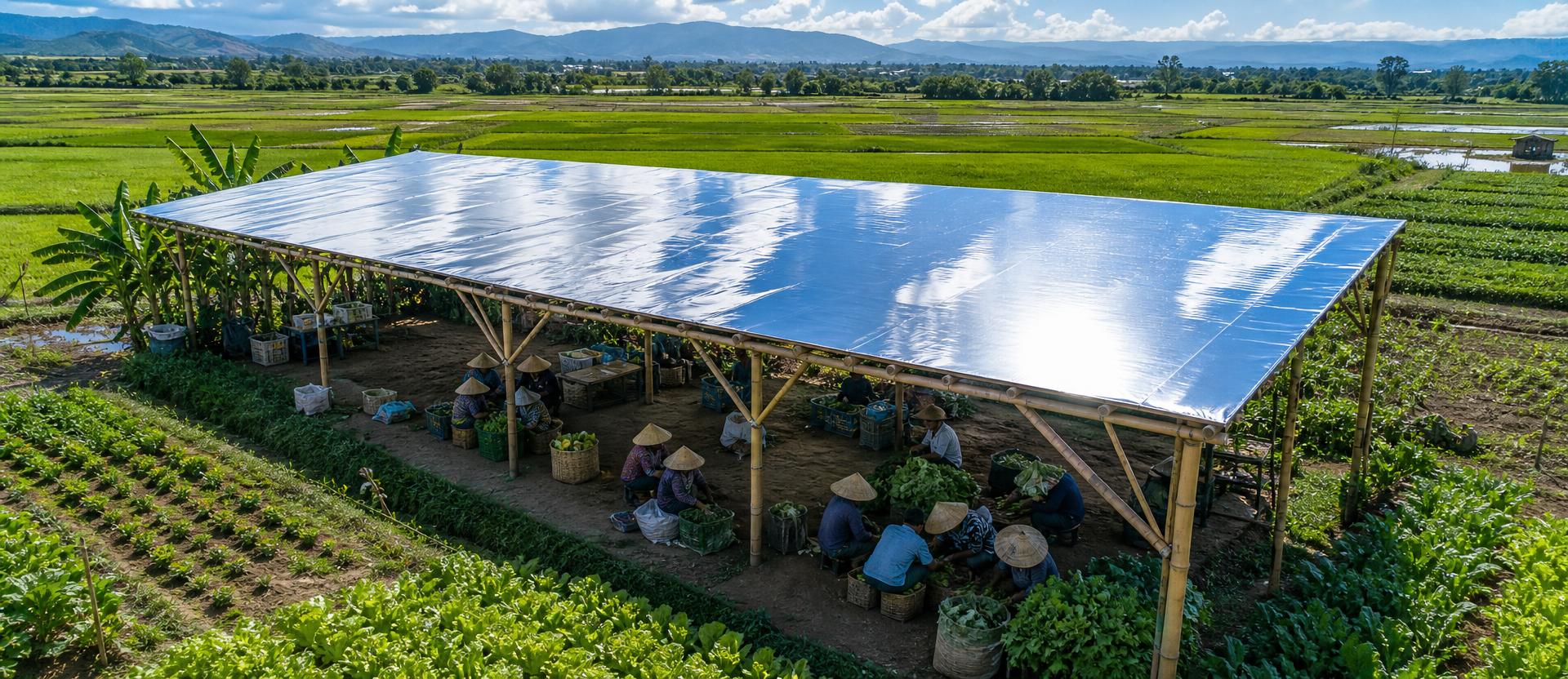
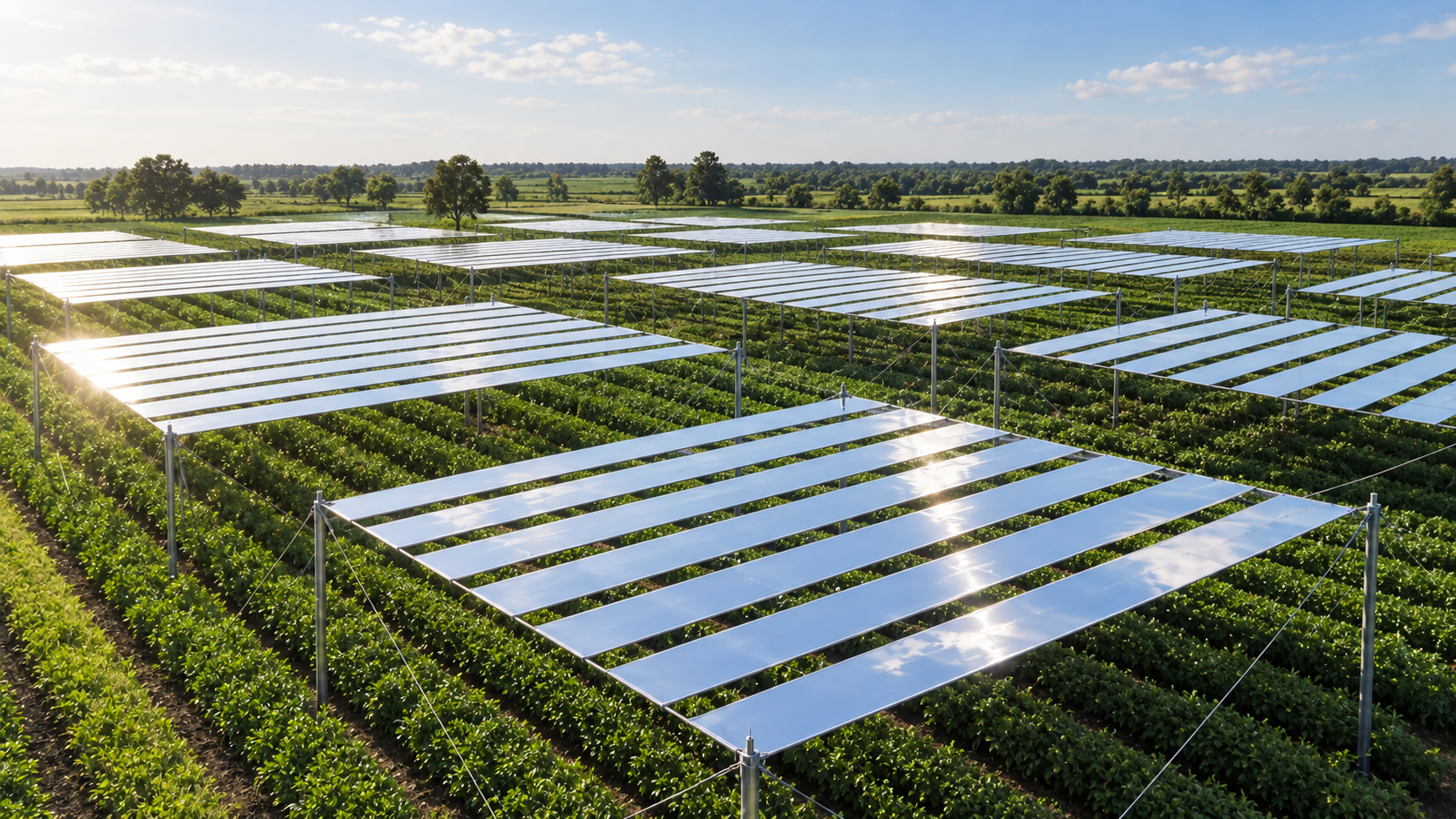
Heat is one of the fastest-growing threats to food systems. MEER is exploring how reflective and passive cooling technologies could eventually support agricultural resilience — for crops, livestock, irrigation systems and the people who work the land.
Crops
Selective shading to reduce heat and moisture stress on high-value crops during peak solar hours.
Livestock
Reflective shelters that reduce radiant heat load on animals and the ground beneath them.
Irrigation
Reflective covers over water storage to reduce evaporative losses in arid regions.
Workers
Shade infrastructure engineered around the physiology of workers exposed to extreme heat.
These applications remain in early research and prototype stages. Field trials and ecological assessments are needed before any application is proposed at scale.
From an idea to a technology the world can trust.
Every MEER technology moves through the same evidence-based pathway. We publish openly at each stage and refuse to skip steps in the name of speed.
- Stage 01
Concept Research
Question, hypothesis, literature.
- Stage 02
Laboratory Development
Controlled measurement of properties.
- Stage 03
Engineering Design
Buildable, testable physical systems.
- Stage 04
Prototype Testing
Instrumented performance under load.
- Stage 05
Field Validation
Real-world monitoring across climates.
- Stage 06
Independent Evaluation
External review and peer scrutiny.
- Stage 07
Future Deployment
Only after evidence supports it.
Compare the portfolio at a glance.
Each technology occupies a different point along the development pathway. Selecting a row reveals its current status, mechanism and future potential.
Reflective Roof Systems
Field ValidationBuildings, homes, schools, hospitals
- Mechanism:
- High-albedo surface reflection
- Location:
- Sierra Leone · India · Tanzania
- Future potential:
- Widespread retrofit of vulnerable housing stock.
Passive Cooling Paint Systems
Laboratory DevelopmentCoatings for roofs, walls, infrastructure
- Mechanism:
- Reflective and radiative coating
- Location:
- China (materials lab)
- Future potential:
- Low-cost coating platform for global rollout.
Canopy Systems
Prototype TestingOutdoor spaces, markets, courtyards, farms
- Mechanism:
- Elevated reflective shade
- Location:
- Sierra Leone · China · India
- Future potential:
- Modular deployment across community spaces.
Floating Reservoir Systems
Concept ResearchReservoirs, ponds, storage water bodies
- Mechanism:
- Inflatable Al–PET reflective laminates
- Location:
- Concept & feasibility research
- Future potential:
- Water conservation and thermal management.
Agriculture Applications
Prototype TestingCrops, livestock, irrigation, workers
- Mechanism:
- Selective reflective shading
- Location:
- Early field trials
- Future potential:
- Heat resilience for food and farm labour systems.
Research & Product Development, guided by evidence.
Our portfolio will keep evolving as materials, engineering and field evidence improve. Alongside developing each product, we commit to the research priorities that determine whether passive cooling can genuinely scale.
Improved materials
Higher reflectance, better emissivity, longer service life.
Engineering optimisation
Simpler, more repeatable systems that install anywhere.
Durability
Proven performance across weather, wear and time.
Environmental performance
Low embodied impact, safe end-of-life pathways.
Affordability
Genuine accessibility for the communities most exposed to heat.
Scalability
Systems that can move from single sites to entire cities.
Scientific validation
Independent measurement and peer-reviewed evidence.
A scientific research programme for a hotter world.
MEER is a scientific research and engineering organisation developing a portfolio of passive cooling technologies for different environments and climates. If you are a researcher, engineer, funder or partner interested in accelerating this work, we would like to hear from you.