US Environmental Protection Agency
Urban Heat Islands and Climate Change
Overview of heat island causes, impacts and mitigation strategies.
Applying MEER's passive-cooling research portfolio across the built environment — rooftops, streets, schools, hospitals, markets, transport and informal settlements — as an evolving research and engineering program.
Urban areas are warming faster than surrounding rural landscapes due to the combined effects of climate change and the urban heat island effect. As cities expand, more solar energy is absorbed by buildings, roads and infrastructure, creating hotter environments that threaten public health, infrastructure, water resources and economic productivity.
Cities are becoming increasingly vulnerable to extreme heat.
Concrete, asphalt, brick and dark roofing materials absorb large amounts of solar radiation during the day before slowly releasing that heat through the evening and night. This creates the urban heat island effect, where cities remain significantly warmer than surrounding rural areas, particularly after sunset.
Climate change is intensifying this phenomenon. Rising global temperatures, more frequent heatwaves and expanding urbanization combine to increase heat exposure for hundreds of millions of people worldwide.
Urban heat affects nearly every aspect of city life. It increases electricity demand, places pressure on healthcare systems, accelerates infrastructure degradation, reduces worker productivity, worsens air pollution and disproportionately impacts older adults, children and lower-income communities.
Reducing the solar radiation absorbed by urban surfaces is becoming one of the most effective and scalable strategies for making cities resilient to rising temperatures.
Over half of the world's population now lives in urban areas — a figure expected to approach 70% by 2050.
Urban heat islands can leave city centers this much warmer than surrounding rural areas, particularly at night.
Dark roofs and pavements can account for a large proportion of the solar heat absorbed inside a city.
Hundreds of millions of urban residents face increasingly dangerous heatwaves as the climate warms.
Dark asphalt and rooftop surfaces can exceed these temperatures during summer heatwaves.
Buildings and paved surfaces trap heat, keeping cities warmer day and night.
Extreme urban heat increases heat stress, illness and mortality, especially among vulnerable populations.
Higher temperatures drive air-conditioning use, raising electricity demand and associated emissions.
Repeated heating accelerates deterioration of roads, buildings, railways and other infrastructure.
Cooling cities is one of the fastest ways to improve climate resilience.
Unlike many climate interventions that take decades to deliver benefits, reducing urban surface temperatures can immediately lower indoor temperatures, cut energy consumption, improve outdoor comfort and decrease heat exposure.
Reflective materials, cool roofs, passive daytime radiative cooling (PDRC) coatings, reflective canopies, shading systems and other high-albedo technologies all reduce the solar energy absorbed by urban infrastructure.
These approaches complement traditional urban planning measures such as increasing vegetation and expanding tree cover, offering practical solutions that can often be deployed quickly and at relatively low cost.
Select a city to see summer conditions, recent heat records and heat island intensity.
26 cities mapped
Scientific and institutional evidence on urban heat and health.
US Environmental Protection Agency
Overview of heat island causes, impacts and mitigation strategies.
World Health Organization
Fact sheet on health risks from rising heat exposure.
NASA Earth Observatory
Satellite thermal imagery showing how cities heat relative to their surroundings.
UN-Habitat
How urbanization and climate risk intersect in cities worldwide.
IPCC
The scientific consensus on urban climate risk and adaptation.
The Lancet
Annual indicators tracking heat exposure and health outcomes.
MEER is developing a suite of urban cooling technologies designed to reduce the solar energy absorbed by cities before it becomes heat.
Our work includes reflective roofing systems, passive daytime radiative cooling (PDRC) coatings, high-albedo canopies, reflective pavements and other surface-based solutions that lower urban temperatures while reducing energy demand and improving climate resilience.
Rather than relying solely on energy-intensive air conditioning, these passive technologies aim to prevent heat from building up in the first place — making cities cooler, healthier and more comfortable places to live.
The technologies described on this page are part of MEER's active research portfolio — from reflective roof systems now in field validation, to passive daytime radiative cooling coatings in the laboratory, and modular canopy systems being prototyped in real streets. What differs between urban applications is not the underlying physics but the engineering response to each environment.
We publish progress openly at every stage so other researchers, engineers and communities can build on the work and hold it to account.
Most urban surfaces will never be rebuilt. MEER is developing a passive daytime radiative cooling paint designed to be applied over what is already there — reflecting incoming sunlight and radiating heat out through the atmospheric window, with no power and no moving parts.
The coating is still in laboratory development. Formulations are being optimized for high reflectance, real-world durability and a cost low enough to be usable at city scale.
Learn more about PDRC paint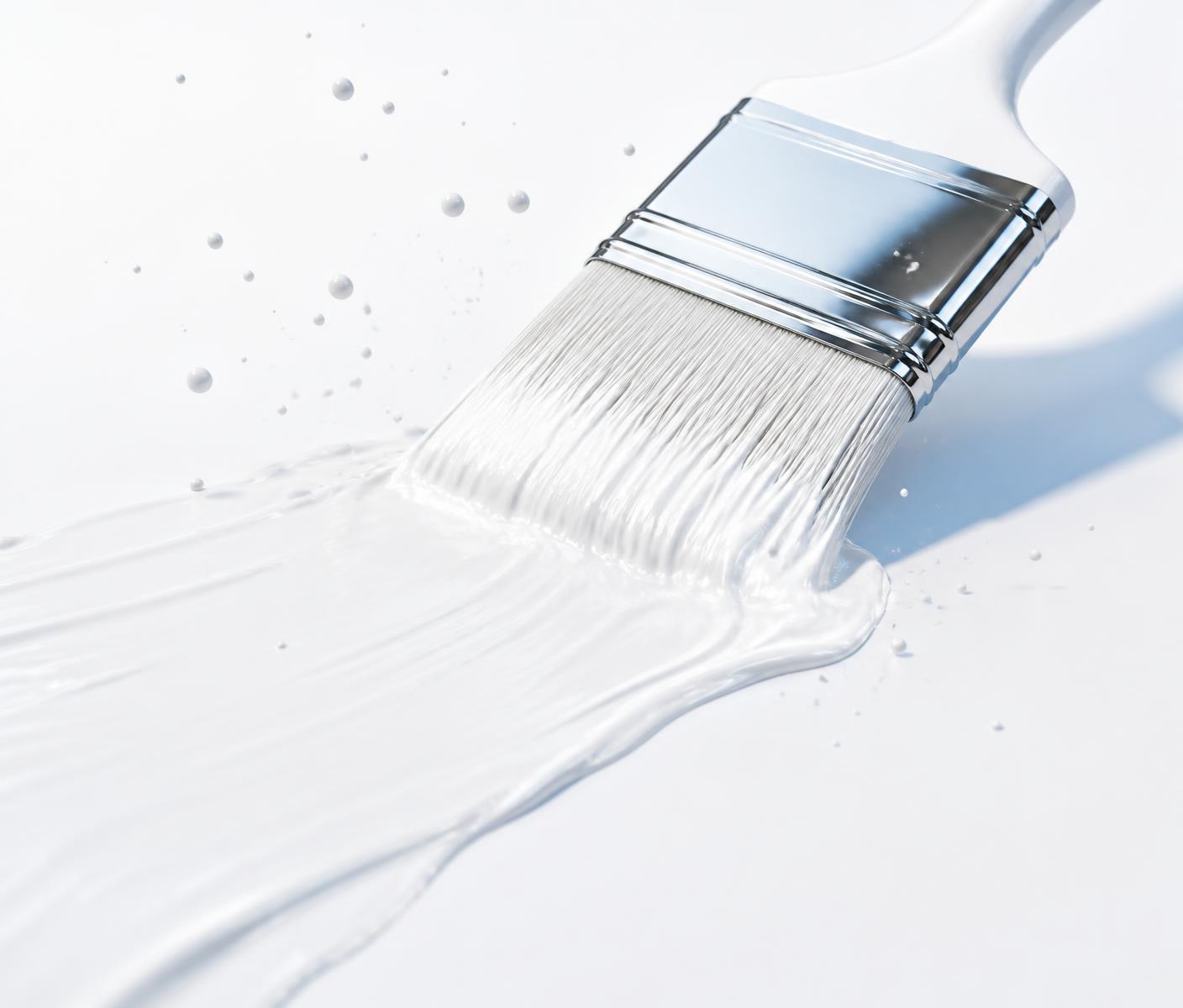
Coating existing metal, concrete and asbestos-sheet roofs where full replacement is not affordable.
West- and east-facing walls that absorb low-angle sun through the hottest hours of the day.
Warehouse envelopes, storage tanks and cold-chain buildings with large exposed areas.
Transport shelters, water tanks and utility structures across dense urban blocks.
Cities become significantly hotter than the countryside around them — a phenomenon known as the urban heat island. The causes are structural: the fabric of the city itself is built to absorb sunlight and release it slowly.
Absorb more than 80% of incoming solar energy and re-radiate it as heat into rooms below and streets above.
Store heat through the day and release it slowly overnight, blocking the city from cooling down.
High thermal mass turns walls and facades into passive heat batteries.
Large impervious plots — car parks, depots, warehouse roofs — amplify local heat loads.
Dense street canyons and reduced airflow trap warm air near the ground.
Fewer plants mean less shade and less evaporative cooling, so surfaces heat more freely.
A simplified temperature profile from rural land, through suburbs, into the urban core and back out again. Peak temperatures are driven by the density and darkness of the surfaces themselves.
Explore how colour, material and location shape roof temperatures — and see how much a reflective or radiative surface changes the picture. All numbers use published solar and material physics; MEER technologies use internally validated values.
Low-emissivity metal — retains heat, radiates poorly.
Data sources: NASA POWER and Global Solar Atlas for insolation; ERA5/Copernicus and NOAA climate normals for air temperature; published engineering values for material solar reflectance and thermal emissivity; MEER internal validation for reflective and PDRC coatings. Estimates are indicative and should not replace an engineering survey for individual buildings.
A dark roof absorbs sunlight and re-emits it as heat. A highly reflective surface sends that same sunlight straight back out through the atmospheric window to space. No power, no water, no moving parts — physics doing the work.
Drag to compare — measured rooftop surface temperatures, MEER field sites
Sunlight is returned before it can become heat in the fabric of a building.
Raising surface albedo from 0.1 to 0.8 removes hundreds of watts per square meter.
Emission in the 8–13 µm window lets surfaces shed heat directly to deep space.
Cooler surfaces mean cooler nights — the difference between rest and heat stress.
Applied across a district, reflective surfaces measurably lower ambient temperature.
Locally made, locally installed, locally maintained — and free to run.
No single technology cools every part of a city. MEER's urban research combines multiple approaches so that each surface — a metal roof, a market square, an asphalt junction, an industrial pond — can be met with the most appropriate intervention. The technologies complement rather than compete.
High-albedo treatments that return incoming solar energy skyward instead of storing it in the building fabric.
Passive daytime radiative cooling coatings that combine reflection with thermal emission through the atmospheric window.
Modular reflective canopies that intercept direct sunlight before it reaches the ground.
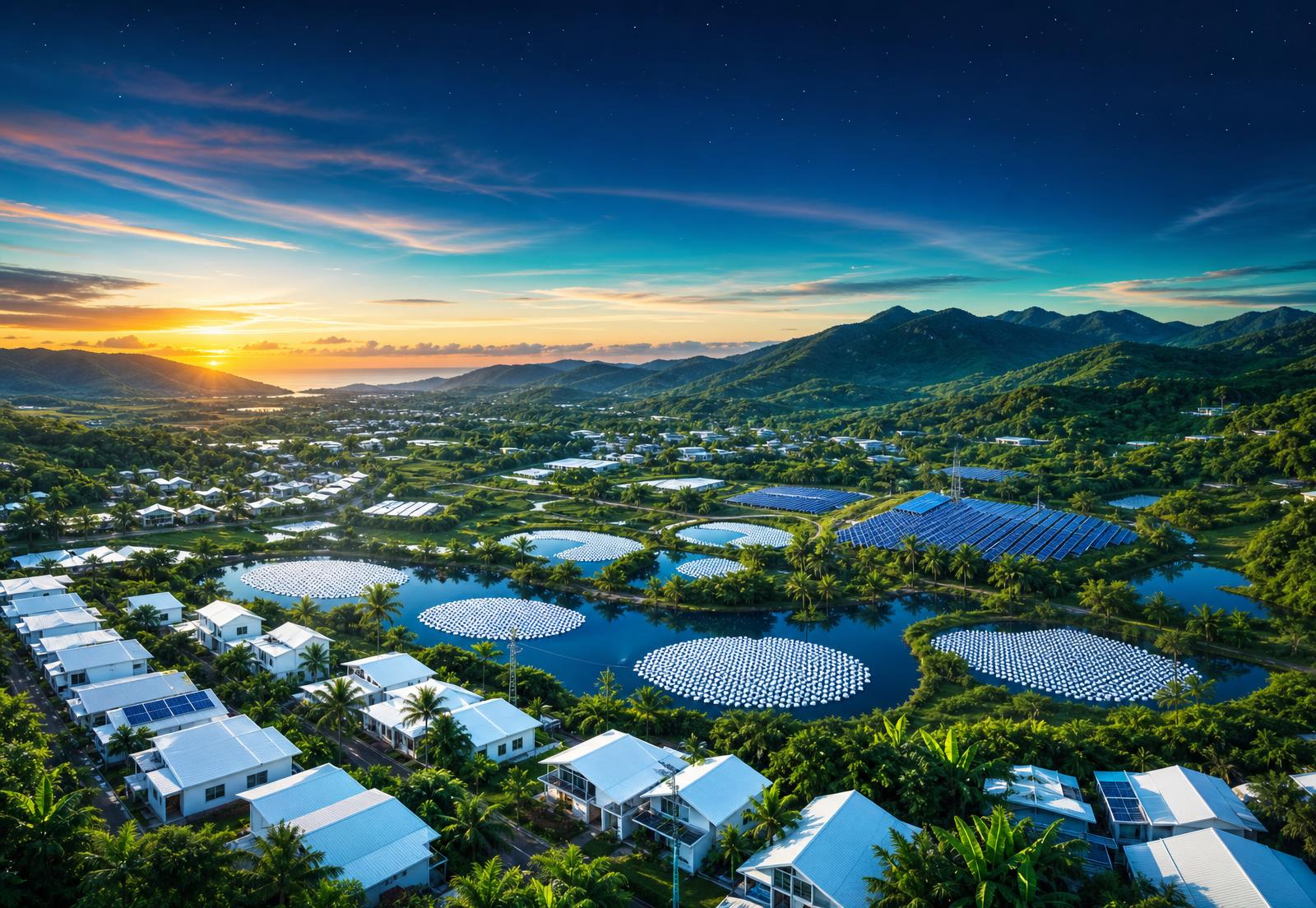
Concept-stage floating covers for water bodies, aimed at reducing solar absorption and evaporation.
Ongoing research into new materials and hybrid systems combining reflectivity, emissivity and durability.
The same core technologies are engineered differently for each environment. The stage badges show where each application currently sits along MEER's development pathway.
Reflective coatings and PDRC materials applied directly to the largest exposed surface in the city — the roof of every building.
Cooler classrooms and shaded playgrounds so children can learn and play through hotter school days.
Protecting patients, staff and equipment from indoor overheating in facilities that cannot afford to fail during heatwaves.
Modular canopies over open-air markets to protect traders and shoppers from direct sun during peak hours.
Squares, parks and pedestrian routes redesigned so people can safely move through the city on the hottest days.
Research into cooler bus stops, transit interchanges, and reflective surfaces around roads and stations.
Large low-rise roofs are ideal candidates for reflective and radiative coatings — reducing indoor heat and cooling loads.
Concept work on reflective floating systems for cooling ponds and process water storage in industrial sites.
Working with communities where extreme heat is already a daily emergency, applying low-cost reflective systems tailored to local building stock.
A single cool roof helps one household. A city-wide network of reflective surfaces, PDRC coatings and canopy systems can lower temperatures across whole neighbourhoods — and change how a city feels during a heatwave.
MEER is actively researching how these technologies combine at scale, including modeling, field measurement and long-term monitoring in partnership with local communities.
Reflective roofs across every building
PDRC coatings on high-exposure surfaces
Canopies over streets, markets, squares
Instrumented monitoring at the block level
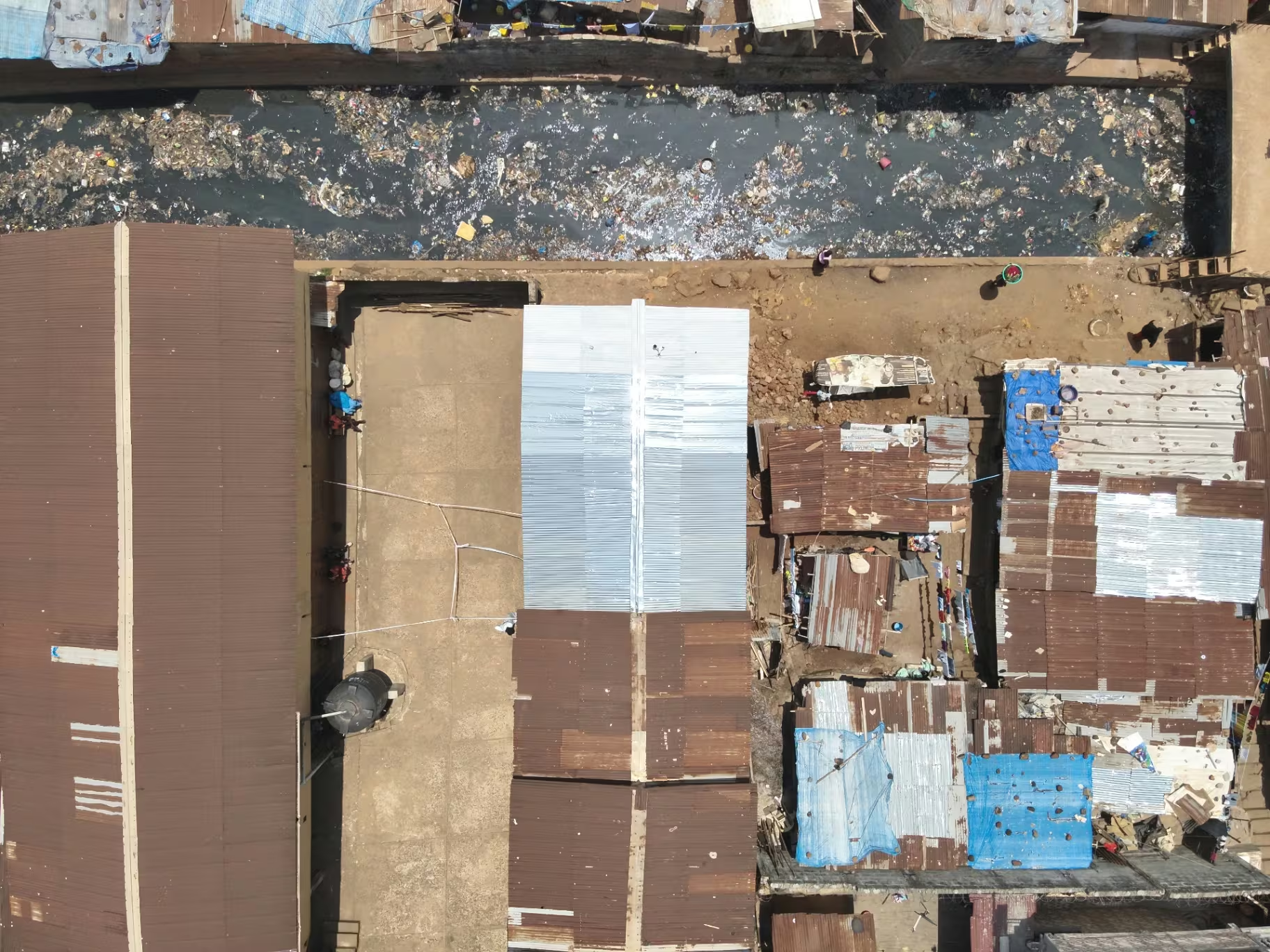
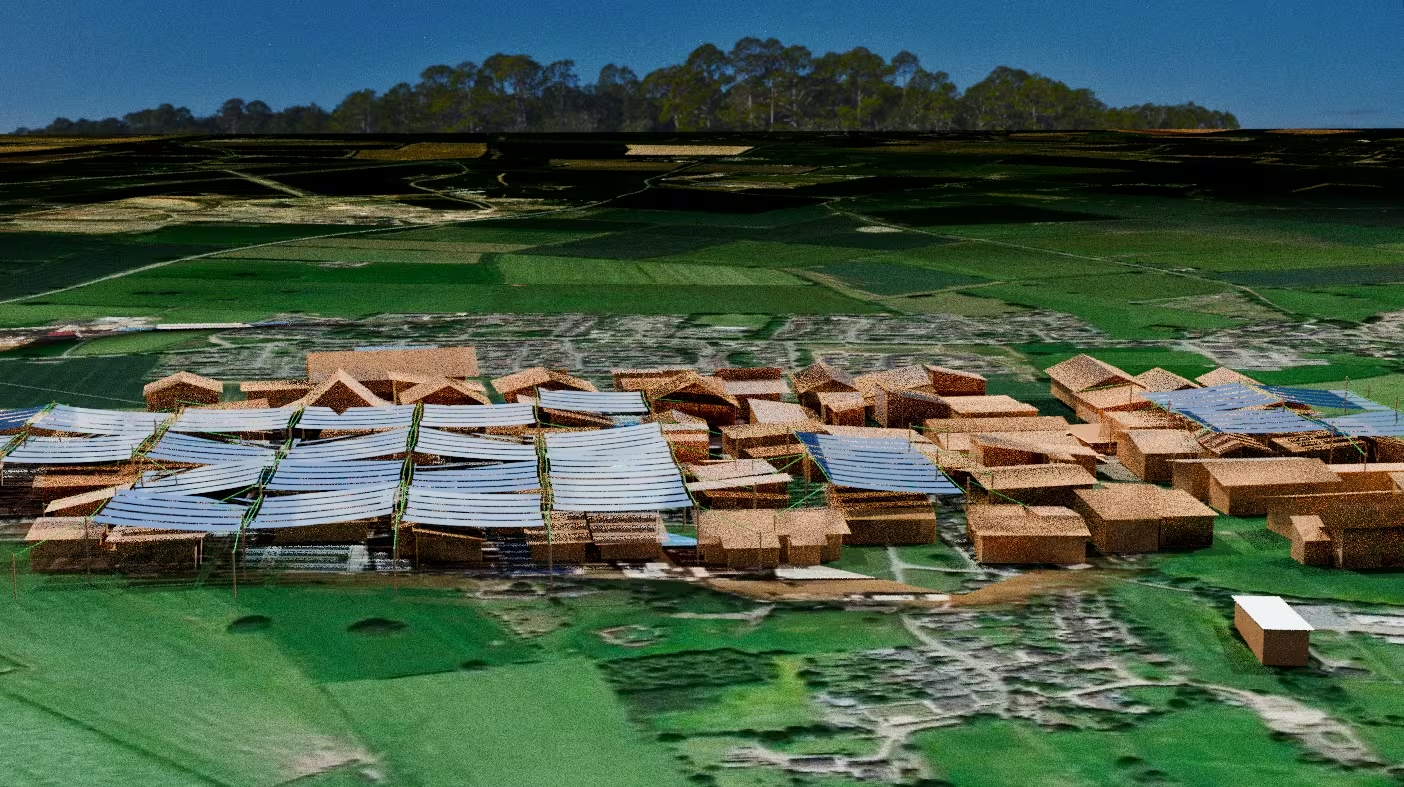
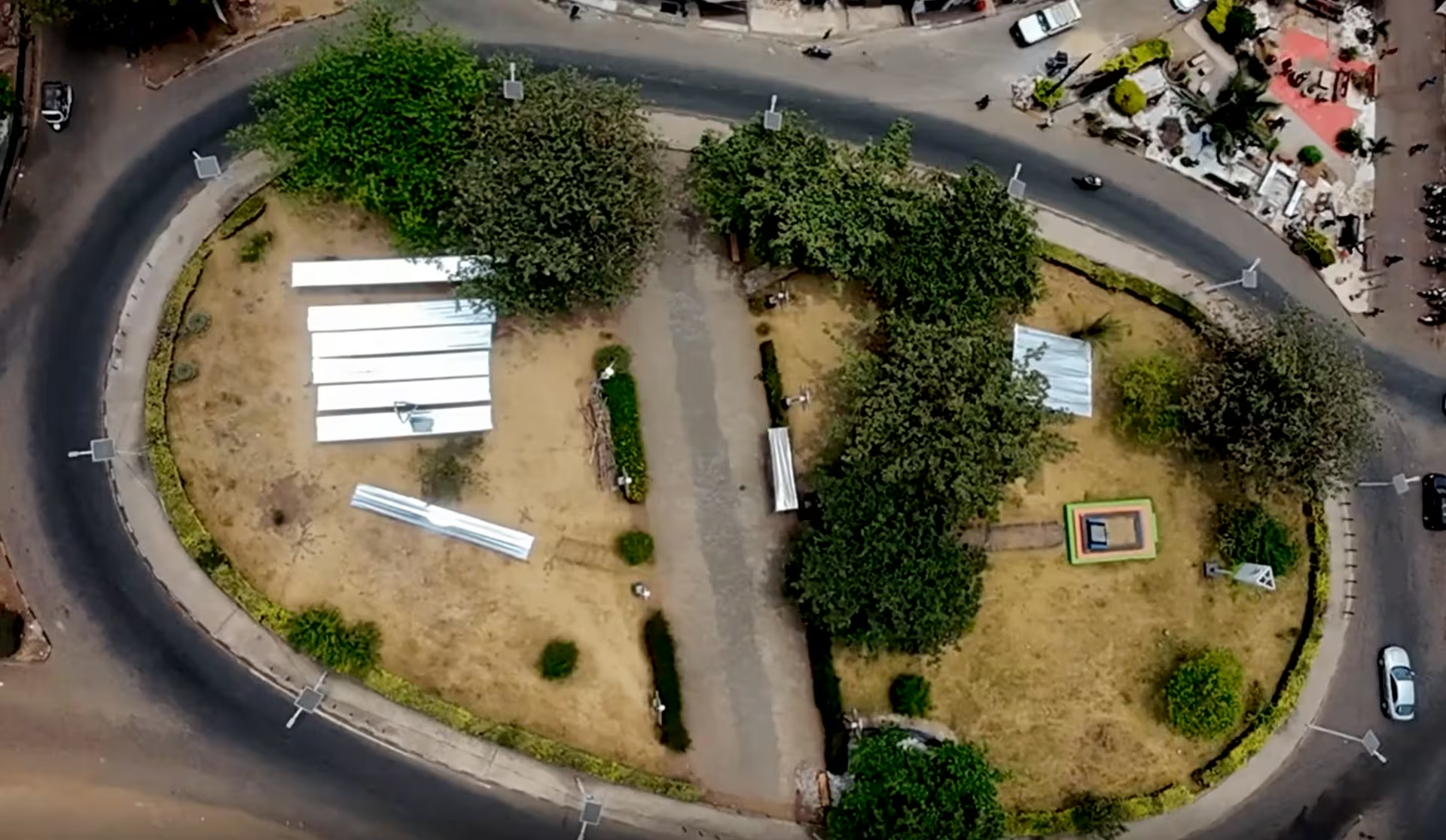
Rather than waiting until laboratory work is “finished” before engaging with the real world, MEER develops, tests, measures and refines urban cooling systems through an iterative loop of scientific research and real-world validation.
We move from concept, through the laboratory, into engineered prototypes and instrumented field trials. Nothing on this page should be read as a finished commercial product unless explicitly described that way elsewhere on the site.
The full research and engineering portfolio behind every urban application.
ExploreWhy reflectivity is the physical lever behind every urban cooling strategy.
ExploreHow selective emitters send heat past the atmosphere to cold space.
ExploreHow urban interventions compare on cooling delivered per unit of energy input.
ExploreField updates from partner cities and communities.
ExploreIf you are a city, researcher, engineer or partner working on urban heat, MEER would like to hear from you. The portfolio evolves faster when it is shaped by the places it will serve.